Window and Door Handles & Pull Handles
Comprehensive Window and Door Accessories

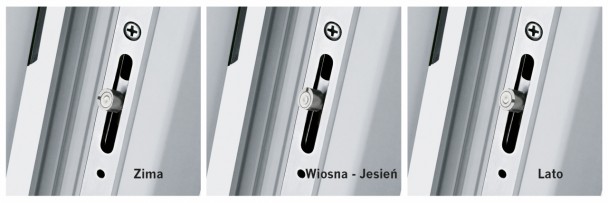
The standard hardware used in aluminum windows comes from the renowned German brand GU, valued for its precision engineering, innovative solutions, and extensive possibilities in terms of security and user comfort. Each window is equipped with modern perimeter hardware that ensures optimal sash pressure against the frame. Thanks to adjustable locking cams, the pressure can be precisely adjusted — including seasonal adjustment depending on weather conditions.
Standard Features
The system is complemented by a modern aluminum handle available in various color options, including versions lockable with a key.
Thanks to the applied solutions, the sash compression force can be easily adjusted by rotating the mushroom cams positioned around the sash perimeter. This ensures durability, tightness, and year-round operating comfort.
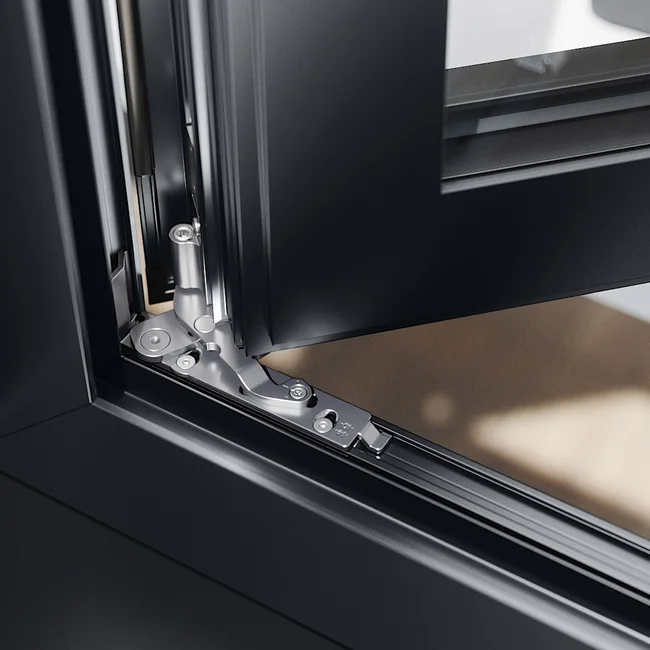
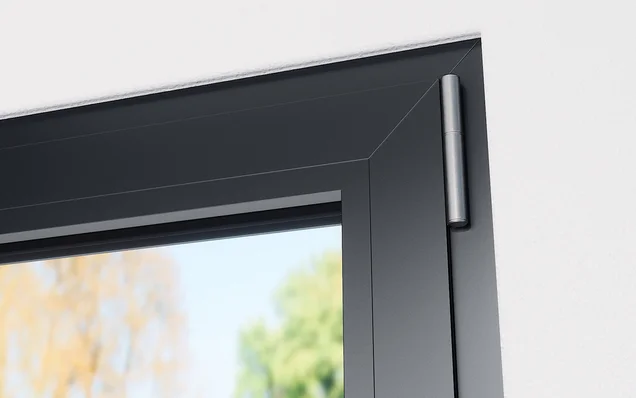
Hardware with concealed hinges is an excellent solution for customers who pay particular attention to window aesthetics and sash load capacity. In this system, the hinges are mounted inside the frame and remain invisible from the outside. As a result, only the aluminum handle is highlighted within the modern design of aluminum windows. Another advantage of this hardware is its sash load capacity of up to 130 kg, significantly increasing durability and operating comfort.
Aluminum windows with enhanced burglar-resistance hardware in RC1 and RC2 classes are becoming increasingly popular every year. RC1 hardware provides protection against forced opening for approximately 30 minutes using physical force without tools. RC2 hardware protects against break-in attempts using tools such as screwdrivers or pliers, with a minimum resistance time of 3 minutes. It is important to note that when purchasing RC1 or RC2 hardware, windows should also be equipped with glazing of an appropriate burglar-resistance class. For this reason, the market also offers RC1N and RC2N windows, where only certified hardware is required, without mandatory burglar-resistant glazing.
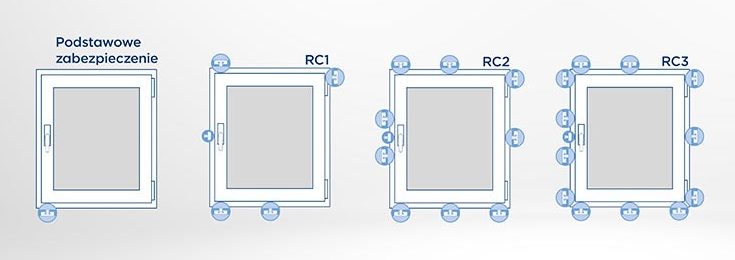
An increasingly popular method of improving window security is the installation of magnetic contacts. These consist of two magnetic sensors mounted between the window frame and sash, usually connected to an alarm system or access control system. When the window is opened or tilted, the electromagnetic circuit is interrupted and a signal is sent to the alarm system. A major advantage of this solution is that the sensors detect a break-in attempt before the intruder enters the building.
Additionally, the magnetic contacts used in windows are integrated directly with the hardware. This means that not only opening or tilting the window interrupts the circuit, but any movement of the hardware itself. They can also be integrated with smart home systems controlling air conditioning, heating, and ventilation. Importantly, they are compatible with virtually all alarm systems available on the market. Another undeniable advantage is that the sensors are installed inside the window structure, maintaining a clean and aesthetic appearance.
In many cases, tilt windows are installed at significant heights, making safe and comfortable operation using a standard handle impossible. Although tilt windows may be equipped with a side-mounted handle instead of a top-mounted one, access can still be difficult due to the installation height. The ideal solution in such cases is the use of fanlight openers. With these systems, windows can be installed at virtually any height above the floor. Window opening can be controlled either mechanically or electrically.
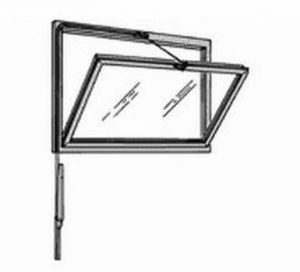
Mechanical Fanlight Openers.
Mechanical operation is performed using a lever connected to a flexible linkage, which in turn connects to a scissor mechanism controlling window tilting and closing. When using this solution, it is important during the design stage to plan the lever mounting location and linkage routing, as well as to remember to close the window before leaving the building.
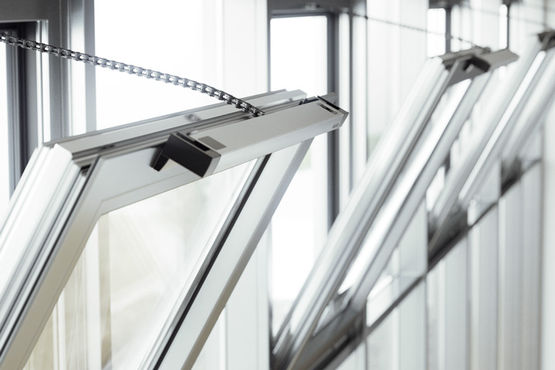
A more advanced solution is a window equipped with an electric chain actuator connected to the building’s electrical installation. The actuator can additionally be integrated with alarm, ventilation, or fire protection systems, effectively regulating airflow while maintaining safety. Actuators may be connected in multiple rows and configured in various ways. Control can be performed using: Wall-mounted switches, Remote controls, Sensors, Smartphones.
An ideal solution is a concealed chain actuator integrated within the window frame. The entire opening mechanism remains hidden inside the frame, resulting in a highly aesthetic appearance without taking up additional space around the window. At the same time, it retains all the advantages of a standard chain actuator system.

Comprehensive Window and Door Accessories
Security Starts with Hardware
Perfect Performance Starts with Hinges